
A customer once held two bulbs in one hand and asked us a simple question. “Which one is the real one?”
Both were real. They were just different sizes, and that difference decides how a roofline looks from the street. Plenty of homeowners get confused because the numbers on the packaging, and the numbers online, do not always agree.
We are Elves Holiday Lighting in Howell, and we put commercial grade LED C9 bulbs on every roofline we light. This guide explains c7 vs c9 Christmas lights in plain terms, shows where each one fits and tells you why we made C9 our standard.
The short answer
C9 is the larger bulb and the standard for rooflines, especially on two story homes. C7 is a size smaller and suits finer details such as windows, doors, railings and some low single story eaves.
Here is the quick comparison:
- C9: bigger, bolder, easy to read from the street. Best for most rooflines.
- C7: smaller, more delicate. Best for close up details and smaller scale spaces.
Let us look at what those names really mean.
What do C7 and C9 actually mean?
The eighths of an inch rule
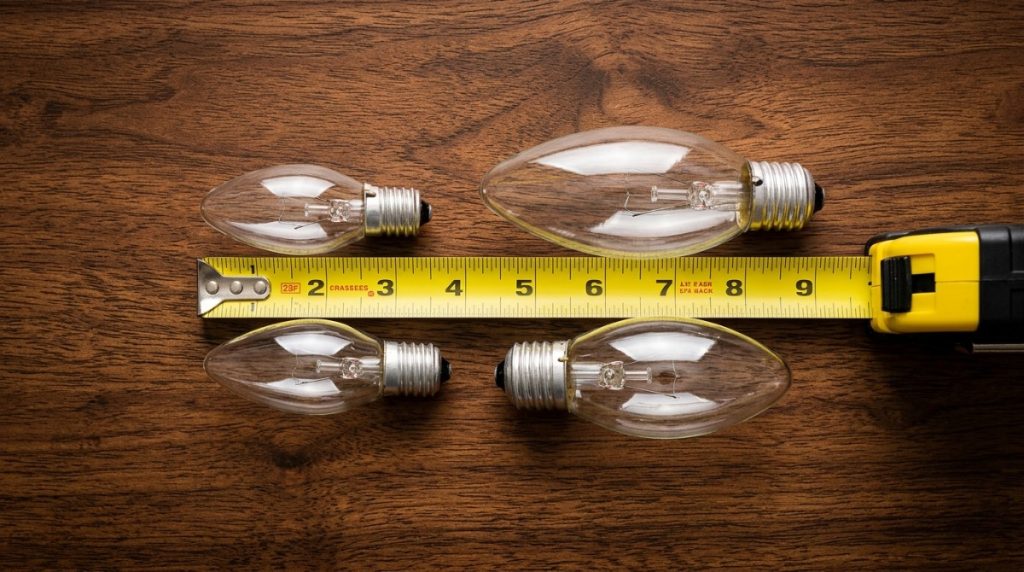
The number in the name tells you the bulb’s diameter in eighths of an inch. A C7 is about 7/8 inch across. A C9 is about 9/8 inch, which is 1 1/8 inches. Sizes are approximate and measured at the glass, so you may see small differences between brands.
That is why the C9 looks noticeably larger, even though the numbers are close. A small change in diameter adds a lot of visual weight when you see a whole roofline of bulbs.
Base sizes and why they are not interchangeable
The base is the part that screws into the socket. C7 bulbs typically use a smaller E12 base. C9 bulbs typically use a larger E17 base. You can read more about how these are named in this overview of the Edison screw.
Because the bases are different sizes, a C7 will not fit properly in a C9 socket, and the reverse is also true. Check the base before you buy, especially if you are adding to a string you already own.
LED versus incandescent versions
Both sizes come in LED and older incandescent versions. LED is the better choice today. It uses far less energy, stays cooler and lasts much longer. The U.S. Department of Energy covers the basics in its LED lighting guide. We use commercial grade LED only.

Side by side: C7 versus C9
Size and visual weight
C9 has more presence. On a two story house, a line of C9 bulbs reads clearly from the curb and gives the roof a full, classic outline. C7 looks lighter and more refined. On a tall roofline, it can look a bit thin from far away.
Brightness and color saturation
Larger bulbs tend to show more color and glow. A C9 gives a richer, fuller look, which is why it stands out well against dark roofs and winter evenings. C7 gives a softer, subtler effect. Exact brightness depends on the product, so compare specific bulbs rather than assuming.
Spacing
Twelve inches between bulbs is common for roofline work, and it gives a smooth, even line from the street. Spacing should stay consistent along the whole run, whichever size you pick.
Cost and availability
Larger bulbs and longer strings can cost a bit more. Both sizes are easy to find. If you are comparing prices, look at the quality of the socket, wire and LED, not only the bulb size.
Durability in cold weather
Michigan winters are tough on any light. Cold, snow and wind work on sockets and wiring more than on the bulb size itself. Commercial grade construction matters far more than choosing C7 or C9.
Which one fits your roofline?
Think about height, distance and the style of your home.
Two story homes
Go with C9. The roof is high, and viewers see it from a distance. The bigger bulb keeps the line bold and readable.
Single story ranches and garages
Here you have a choice. C9 still gives a bright, classic look and works well. C7 can suit a low, compact roofline where a bold bulb might feel like too much. We are happy to show you both.
Long driveways and deep setbacks
Many Livingston County homes sit back from the road. The farther the house is from the street, the more a larger bulb helps. A delicate line can fade out at a distance, especially when snow covers part of the view.
Steep gables and complex roofs
Roofs with many peaks and gables have a lot of lines. C9 keeps each line clear and consistent. Too small a bulb can make a complicated roof look busy or incomplete.
The street test: how to decide from the curb
Stand at the end of your driveway or across the street. Imagine a bulb about the size of a golf ball sitting on your roof edge. If it feels right, go with C9. If it feels too heavy for the house, C7 may be better. A digital rendering makes this much easier to judge.
Can you mix C7 and C9?
Yes, if there is a design reason. For example, C9 on the main roofline and C7 on a small porch or a set of windows can look intentional.
Keep a few rules in mind:
- Keep the color the same across both sizes.
- Keep the spacing consistent within each run.
- Do not switch sizes in the middle of one straight line.
Without a reason, mixing sizes on a single run tends to look uneven.
Why we use C9 on every roofline
Here is our reasoning, and it is simple. C9 gives the cleanest, boldest result for the widest range of homes. It is easy to read from the street, it holds a steady line and it looks right on both two story houses and long, deep lots.
Choosing one standard also keeps our work consistent. Our crew knows the clips, the spacing and the spots where problems appear. That experience helps us do the job right and fix issues quickly.
We are not saying C7 is wrong. It is a lovely light for the right place. We simply choose C9 for rooflines.
Practical example: the same house with C7 and C9
Picture a two story colonial with a long driveway. With C7, the roofline looks tidy up close, but from the street it softens into a thin glow. With C9, the same line reads clearly from the end of the driveway, and the shape of the house comes through.
One customer started with a smaller size on their own and was not happy with how it looked from the road. When we showed them a rendering with C9, the difference was obvious. They switched, and the house felt properly lit.
That is why we show both options on your actual home whenever we can.
Common mistakes when choosing between C7 and C9
A few missteps come up again and again, so it helps to know them before you buy.
Choosing by the package, not the house. A product page shows a bulb on a white background. Your roofline is dark shingles, snow and winter dusk. Judge the size against your own house.
Forgetting the viewing distance. Up close, a C7 looks full. From the road, it can fade. Always think about where people will actually stand when they look at your home.
Mixing sizes without a plan. Switching between C7 and C9 on one run breaks the rhythm of the line. The eye notices, even if people cannot say why.
Ignoring the base. Buying a string with the wrong base, then trying to make it fit, is a common headache. Check E12 and E17 before you order.
Going cheap on the parts that matter. The bulb size gets the attention, but the socket, wire and LED quality decide whether the line still looks good in January. A well built C7 beats a poorly built C9 every time.
Does bulb size change how you install?
A little. C9 bulbs are larger and a bit heavier, so they need clips that hold the socket firmly and keep each bulb pointing the right way. C7 bulbs are lighter and more forgiving, but they still need clips matched to the roof edge.
Either way, the job comes down to the same few habits: steady spacing, matching clips, no nails or staples and a quick test before and after hanging. If you want the details on clips and surfaces, our guide on whether Christmas light clips damage shingles covers what is safe on each surface.
How many bulbs do you need?
The math is simple. Divide your roofline length in feet by your spacing in feet.
At 12 inch spacing, you need about one bulb per foot. A 100 foot roofline needs roughly 100 bulbs. Add about 5 to 10 percent for corners, turns and spares.
To measure well, count the real length of the line, including peaks, returns and gables. We walk through how in our guide to permanent Christmas lights cost per foot. If you want help choosing the right lights overall, see our guide to the best Christmas lights to use on your roofline.
Frequently asked questions
Are C9 lights brighter than C7?
C9 bulbs are larger and often give a fuller glow and richer color. Exact brightness depends on the product, so compare the specific bulbs you are considering.
Can I use C7 bulbs in C9 sockets?
Not properly. C7 bulbs usually have a smaller E12 base and C9 bulbs a larger E17 base, so they do not fit each other. Always check the base.
How far apart are C9 bulbs?
Twelve inches is common for rooflines and gives a smooth, even look from the street.
Is LED C9 as bright as old bulbs?
Modern LED C9 bulbs can look just as bold, with far less energy use and heat. Warm white LEDs also come close to the glow of older bulbs.
Can I mix sizes?
Yes, with a design reason. Keep color and spacing consistent, and avoid switching sizes in the middle of one run.
See both sizes on your own home
The easiest way to decide is to see it. Request a free digital rendering, and we will show you C7 and C9 on your actual roofline.
Learn more about our residential holiday lighting, read our FAQ or contact us for a free estimate. You can also call us at (810) 522-8950.

One Response