
A few weeks ago, a homeowner asked us to price their roofline for a seasonal display. Halfway through the call, they asked something different: “What would permanent lights cost me per foot instead?”
It is a smart question, and one we hear more every year. We price holiday lighting for Livingston County homes all day, so we know how a per foot number gets built. We also know how easily it gets misread.
This guide walks through the real ranges for permanent Christmas lights cost per foot, how to measure your own house, a worked example you can copy, and an honest five year comparison with seasonal lighting. No pressure. Just numbers you can check against any quote you get.
The short answer: what is the cost per foot?
Here is where the numbers land for most homes:
- DIY retail kits: about $3 to $6 per foot in materials.
- Professionally installed permanent systems: commonly quoted around $18 to $40 per installed linear foot.
- Seasonal professional installation: priced as a package rather than per foot. Many first time Elves customers invest between $800 and $2,000.
These ranges come from public dealer and manufacturer pages, and they shift by region, roof type and product. Treat them as a starting point, not a quote.
One more thing to say up front. We are a seasonal lighting company. We do not install or price permanent systems, so the permanent figures here are market ranges, not our rates.
How to measure your linear feet
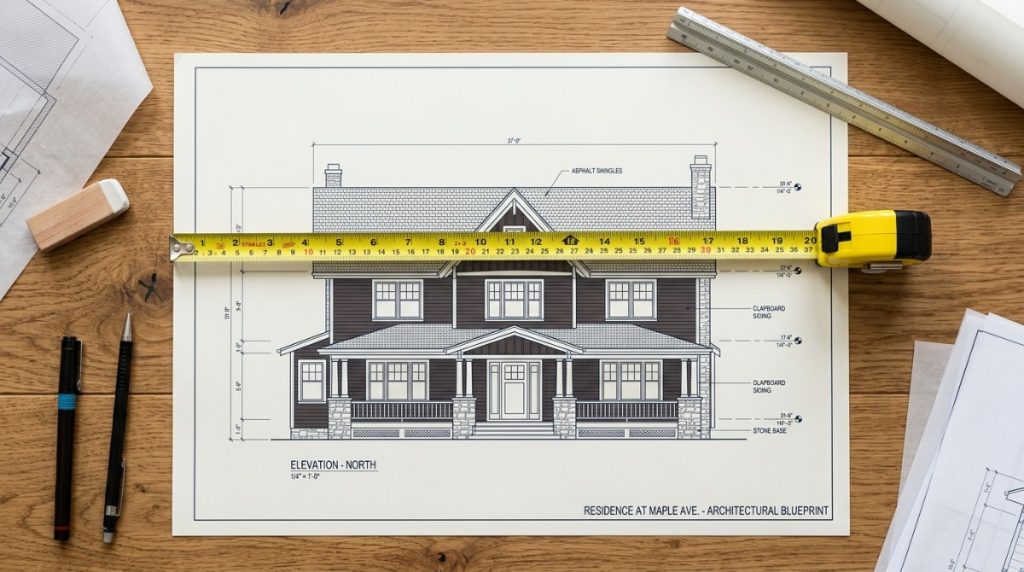
Per foot pricing only works if your footage is right. This is where most homeowners get tripped up.
Rooflines, peaks and returns
Linear feet means the actual length of the line the lights will follow. It is not the width of your house.
Walk the full path along the eave. Then add every peak, because a steep peak is longer than the flat distance underneath it. Add returns too, which are the short sections where the roofline turns back toward the house.
Gables, dormers and garage fronts
Gables add a lot. Each side of a gable follows the slope, so you count both sides. Dormers add their own short rooflines. A garage front that sits forward of the main house adds footage on the front and often on the sides.
Quick method with a satellite photo and a tape measure
You do not need to climb a ladder to get a good estimate.
- Pull up your home in a satellite map and note the main roof lines.
- Measure the front of the house at ground level with a tape measure.
- Add the slope of each gable by estimating its length from the ground.
- Add dormers and garage returns.
- Round up a little for corners.
Why a 150 foot house is not always 150 feet
Here is the story behind that heading. A homeowner once gave us a footage number based on how wide their house looked from the street. When we walked the roofline and counted the peaks and returns, the number changed in a way that moved the quote noticeably.
They were not wrong to guess. Most people forget the slope. The lesson is simple: measure the line, not the house.
What drives the price per foot up or down
Two houses can have the same footage and very different prices. Here is why.
Roof height and pitch
A one story ranch is quick and safe to work on. A steep roof on a two story home takes more equipment, more time and more caution. Labor goes up, and so does the per foot price.
Number of corners, dormers and peaks
Straight runs are cheap to install. Every corner, peak and dormer slows the work down, because each one needs careful cutting, fitting and securing.
Light type and spacing
Tighter spacing between light points looks richer, and it costs more. Better quality LEDs cost more too. Ask what spacing is included in a quote before you compare prices.
Controllers and power supplies
Long runs need more than one controller and more than one power supply. These are easy to overlook, and they are often listed separately. Smart controllers that run color changes and schedules add to the total.
Extra zones such as patios, pergolas and trees
Lighting beyond the roofline is usually priced as add ons. Trees, shrubs, pillars and pergolas all change the final number.
Local labor and season
Labor rates differ across Southeast Michigan. Timing matters too. Booking in the busy part of the year can limit your options and your schedule.
Worked example: pricing a 150 foot roofline
This is an illustration, not a quote. Use it as a model for your own math.
| Path | Math | Year one cost |
| DIY retail kit | 150 feet at $3 to $6 per foot | About $450 to $900 in materials |
| Professional permanent | 150 feet at $18 to $40 per foot | About $2,700 to $6,000 |
| Seasonal professional | Package pricing, many first time homes | Often $800 to $2,000 |
A few notes on this table:
- The DIY number leaves out controllers, power supplies, a proper ladder and your weekend. It also leaves out your risk if the roof is tall.
- The permanent number includes installation, but you should confirm what is bundled.
- The seasonal number is a package that covers design, installation, maintenance, takedown and storage. It repeats each year.
Five year comparison: permanent versus seasonal
Cost per foot only tells part of the story. The better question is what you spend over several years.
Year one cash cost
Permanent costs the most on day one. Seasonal costs the least. A DIY kit sits in the middle, but with the most work on your end.
Years two to five
With a permanent system, years two through five are close to zero for the lights themselves. With seasonal service, you pay again each year, although takedown and storage come with every package.
Here is the simple math. If a seasonal package costs $1,000 per year and stayed flat, five years comes to $5,000. A permanent system at $4,500 would be paid back in about four and a half years. If the seasonal package costs $800, the break even moves later. If the permanent quote is $6,000, it moves later still.
Where the break even actually falls
You will see claims online that permanent lights pay for themselves in two to four years. That can happen. It depends on assumptions, such as how big the seasonal bill is, how long the permanent system lasts and whether you run into repairs.
In our experience, a homeowner who stays in the house for many years and wants lights for more than just Christmas can make the numbers work. Someone who might move in a few years usually cannot.
What is not in the math
These costs rarely show up in a comparison:
- Repairs after storms, ice or wildlife
- Controller or power supply replacement
- Changing colors or layouts you no longer like
- Removal if you sell or repaint
- The value of not touching a ladder every year
Seasonal lighting has its own hidden costs too, mostly the annual price increase. Keep both lists in front of you.
A quick sanity check on any quote
When a quote lands in your inbox, divide the total by your measured footage. If the per foot number falls inside the ranges above, it is in the normal zone. If it sits far above the range, ask what is included. If it sits far below, ask what is missing.
A fair quote should be easy to explain. The installer should be able to tell you the footage they counted, the spacing they are using, how many controllers the job needs and what happens when something fails. If the answers feel vague, keep looking.
Hidden costs people forget
Before you accept any permanent lighting quote, ask about these:
- Extra controllers and power supplies for long runs
- Outlets and electrical work if none exist near the roofline
- Removal costs later
- Repairs, and who pays for them
- App features, subscriptions or fees
For a seasonal quote, ask what is included. Ours covers design, installation, maintenance, takedown and storage in our heated warehouse. We also respond to service calls within 24 to 48 hours if a bulb goes out during the season.
Is it worth it? Who should pay for permanent and who should not
Permanent lights can be worth it. They are not right for every house, and we try to say so plainly.
Permanent may make sense if:
- You plan to stay in the home for many years
- You want lights for more than one holiday
- You want to stop doing yearly ladder work
- Your roofline is simple and your budget is comfortable
Seasonal may be the better fit if:
- You are not sure how long you will stay
- You like changing your design from year to year
- You want a lower up front cost
- Your home has a steep roof, many peaks or tall second story rooflines
We once talked with a family that compared both options carefully. They chose seasonal. Their reason was simple: they liked the idea of seeing a fresh design each year, and they did not want a large bill up front for something they might outgrow.
If you are on the fence, our honest advice is to try a seasonal display first. One or two winters will tell you a lot about what you actually want on your house.
Frequently asked questions
What is the average cost per foot?
For professionally installed permanent systems, quotes are commonly around $18 to $40 per installed linear foot. DIY retail kits run about $3 to $6 per foot in materials, before controllers and your time.
How long do permanent lights last?
Many LED products advertise tens of thousands of hours, often 50,000 hours or more. Real world life depends on weather, power supplies and how well the lights are mounted. You can read more about how LEDs work and how long they typically last in the U.S. Department of Energy guide to LED lighting.
Are there monthly fees?
Not usually for the lights themselves. Some systems include apps or features that may have extra costs, so ask what is included and whether anything renews.
Can I finance permanent lights?
Some dealers offer financing. Terms vary, so read the interest rate, fees and total cost carefully before signing. Seasonal packages are typically paid per season, so there is nothing to finance.
Does it add home value?
We cannot promise it does. Curb appeal matters to buyers, and a clean, well installed system may help. A patchy or outdated install can work against you. Think of it as a lifestyle choice first and an investment second.
Want a real number to compare?
Per foot ranges are helpful, but your house is what matters. Send us a photo of the front of your home and tell us your budget. We will design a seasonal display with a free digital rendering, so you can see the result and compare it with any permanent quote you have.
If you want to understand how holiday lighting traditions and technology developed, this overview of Christmas lights is a fun read.
Learn more about our residential holiday lighting, check our FAQ or contact us for a free estimate. You can also call us at (810) 522-8950.

One Response