
A customer once stood under a big mature maple in their front yard, looked up and asked a question we hear a lot. “Trunk or branches?”
It is a good question, and there is no single right answer. The best choice depends on the tree, the view from the street and your budget. Trunk wrapping vs canopy lighting is really a design decision, and a few facts make it much easier.
We are Elves Holiday Lighting in Howell. We light mature trees across Livingston County, and we have seen how each approach looks once the lights come on. Here is a clear guide.
The short answer
Trunk wrapping gives structure and a defined glow with less effort. Canopy lighting gives volume and reach, so the tree reads from far down the street. The best large tree designs combine a trunk wrap with selective canopy lighting.
A quick summary:
- Trunk wrap: defined, elegant, lower effort and cost
- Canopy lighting: bold, full, more effort and cost
- Both together: the layered look that works best on big trees
Let us look at each one.
What is trunk wrapping?
How it looks
Trunk wrapping means spiraling lights up the trunk, and often out along the main branches. The result is a tree with a glowing frame. The shape of the tree becomes the design. It looks clean and tailored, especially in warm white.
Best trees for it
Trunk wraps are great for trees with a strong, clear structure, like mature maples and oaks. They also work for smaller ornamental trees and for any tree you see up close, such as one by a walkway or porch.
Effort, cost and winter durability
A trunk wrap takes less time and fewer lights than lighting a whole canopy. It is also easier to secure. Because the lights sit close to the trunk and major limbs, they tend to hold up well through wind and snow. It is often the best place to start, especially on a tighter budget.
What is canopy lighting?
Draped strands and cascading lights
Canopy lighting means placing lights through the upper branches, often by draping strands over limbs or hanging cascading strands from higher up. The goal is volume. The whole upper part of the tree glows. You can read more about the canopy of a tree and why it matters.
Sphere lights and large bulbs in branches
Sphere lights, which are glowing balls placed in the branches, and larger bulbs add bold accents. They read clearly from the street and give the tree a more dramatic look. We install sphere lights in trees, and customers love the effect.
Effort, cost and winter durability
Canopy work is the harder part. It needs more lights and more time, and it often needs poles, ladders or lifts to reach tall branches. More strands high in the tree mean more exposure to wind, snow and ice, so secure fastening and a good plan matter. Our guide on how to secure Christmas lights to a tree covers this.
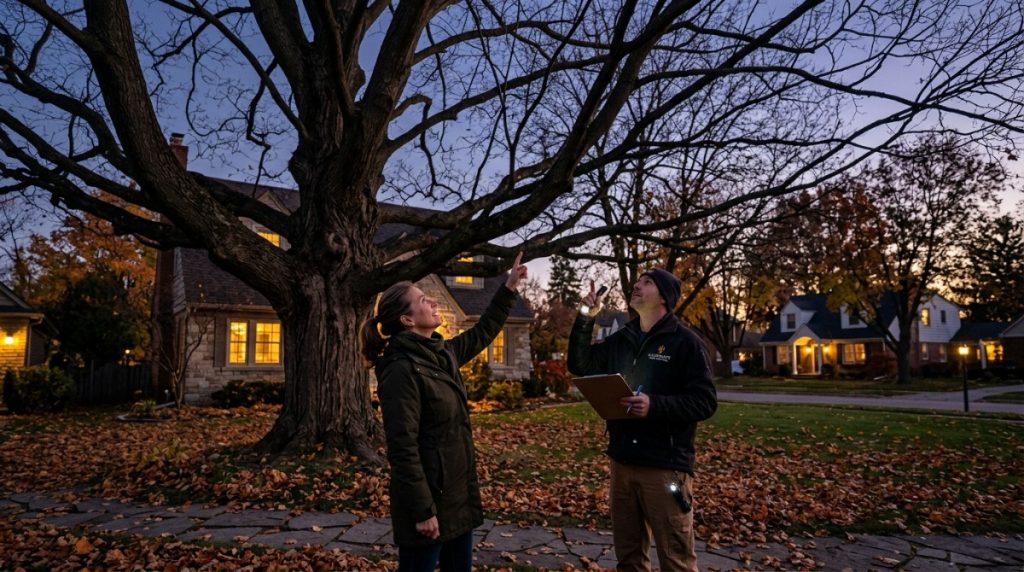
Side by side comparison
Look from the street
Canopy lighting wins from a distance. It fills the space above and shows up clearly from the road. A trunk wrap alone can look modest from far away, especially on a tall tree.
Look up close
Trunk wrapping wins up close. It gives a tidy, refined glow that looks lovely beside a driveway, a path or a front door.
Cost and time
Trunk wrapping costs less and takes less time. Canopy lighting costs more, because it uses more lights and more labor. A layered design costs the most, but you can phase it.
Tree health
Both are safe when done properly. Loose wraps, no nails or staples and removal after the season protect the tree. Canopy lighting adds a little more weight on branches, so the plan should account for the strength of each limb.
Wind, snow and ice
Trunk wraps are the steadier option. Lights on the trunk and main limbs move less. Canopy lights sit higher and catch more wind and snow, so they need careful fastening and gentle slack.
How Michigan trees change the decision
Bare hardwoods in December
Maples and oaks lose their leaves, so in December the branches are bare. You can read more about oak and maple trees if you want to know what you are working with. A bare tree shows its whole structure, which is why trunk and branch wraps look so good. Lit branches stand out clearly against the winter sky.
Evergreens and conifers
Spruces and other evergreens have dense needles that swallow light. Canopy lighting can be more effective here, since lights placed on the outer branches show up better than lights tucked into the trunk area. The trunk itself is often hidden.
Mature trees near the road
Many Livingston County homes sit back from the road, and big trees often stand near it. Trees that people see from a distance and from moving cars benefit from some canopy lighting, because a trunk wrap alone can fade from far away. Early dark in Michigan makes the effect even stronger.
Combining both: a layered design
For large trees, we often recommend a layered design.
- A warm white trunk wrap gives the tree structure and a steady base glow.
- Selective canopy lighting adds volume where it matters most, such as the outer branches facing the street.
- Color pairing. Keep the main color consistent. A touch of cooler white or an accent color in the canopy can add depth, but go gently.
Layering gives you the defined look of a wrap and the reach of the canopy. It also lets you add to it over time. For help choosing the bulbs, see our guide to the best lights to wrap trees.
Practical example: two mature trees, two designs
Here is a general example of how two trees in one yard might get two different designs.
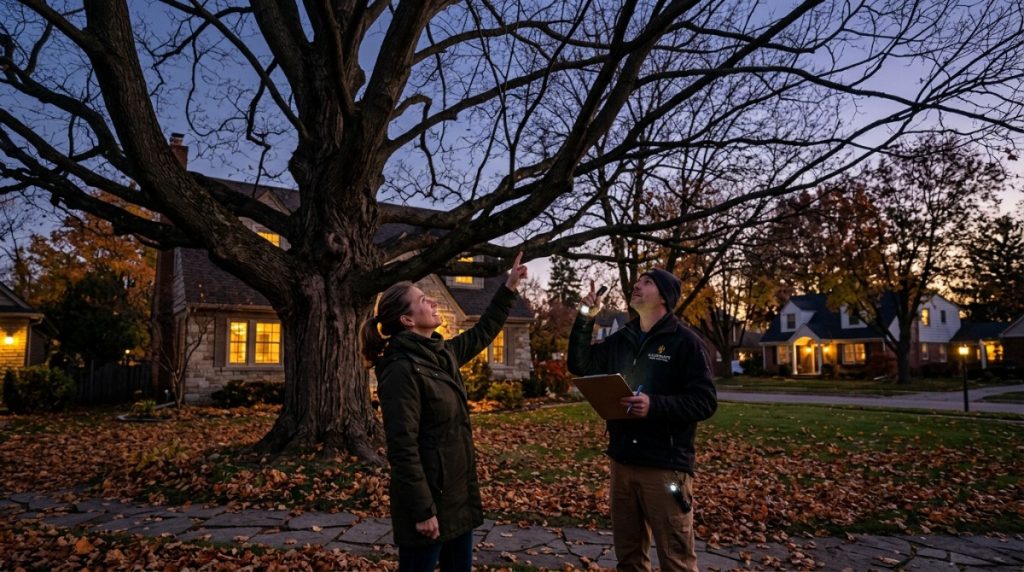
The first is a big maple near the road. From the street, it needs presence. We would wrap the trunk and main limbs in warm white and add selective canopy lighting on the branches facing the road. The result reads clearly from a distance and looks refined up close.
The second is a mature oak beside the driveway. People see it up close as they come and go. A trunk wrap with branch extensions gives it a strong, elegant glow without the cost of a full canopy.
One customer started with a trunk wrap on their main tree and added canopy lighting the next year. They liked seeing the tree come together in stages, and they spread the cost across two seasons.
Which one gives the best result for the money?
This is the question behind most trunk or canopy decisions. Here is how we think about it.
On a tight budget, the trunk wrap usually wins. For the cost, it gives the tree a finished, polished look, and it holds up well in winter. If you can only light one thing on a mature tree, this is a safe place to start.
If your priority is being seen from the street, canopy lighting earns its cost. Trees that stand near the road, or trees that people view from moving cars, need volume to read at a distance. A trunk wrap alone can look quiet from that far away.
If you have two big trees and a moderate budget, a good approach is a trunk wrap on both, with canopy lighting added to the one people see most. That way, you get a polished yard and a bold focal point without paying for full coverage on everything.
Whatever you choose, the digital rendering is the easiest way to compare. Seeing your own trees lit in each style often settles the question in a few minutes.
Common objections, answered honestly
“Canopy lights cost too much.” They can, and that is exactly why phasing works. Start with the trunk, then add canopy later. You do not have to decide everything this year.
“Trunk wraps look too plain.” On their own, in warm white, they can look understated. That is often the appeal. If you want more drama, add selective canopy lighting or a few sphere lights.
“Big trees are hard.” They are. Tall trees need the right equipment and experience, and that is a good reason to let a crew handle the high parts. Many homeowners keep the lower trunk and hand off the canopy.
“I will wait until the tree looks better.” Bare winter hardwoods are actually some of the best subjects for lights. The branch structure becomes the design, and lights show up clearly against the winter sky.
Budget and phasing
You do not have to do everything at once.
- Year one: wrap the trunks. It is the most cost effective way to make trees look finished.
- Year two: add canopy lighting where it helps most, usually on the street facing side.
- Later: add sphere lights or accents if you want more drama.
Our quote form offers budget ranges so we can design around what works for you. Many first time Elves customers invest between $800 and $2,000 for a full package. Your trees are part of the design, and we can show different options in a rendering.
Frequently asked questions
Which costs more?
Canopy lighting usually costs more, because it needs more lights and more labor. Trunk wrapping is typically the lower cost choice.
Can I do trunk only?
Yes. A trunk wrap on its own can look great, especially up close and on trees with strong structure.
Do bare branches look good lit?
Yes. In winter, bare hardwood branches show their full shape, and lights on the trunk and limbs look striking.
Does canopy lighting hurt trees?
Not when it is done carefully. Loose placement, no nails or staples and removal after the season protect the tree.
Can I add canopy later?
Absolutely. Many homeowners start with a trunk wrap and add canopy lighting in a later season.
See both looks on your trees
Choosing is easier when you can see it. Request a free digital rendering, and we will show you a trunk wrap, a canopy design and a layered look on your own trees. Our crew also handles takedown and storage in our heated warehouse, so there is nothing to clean up in January.
Learn more about our residential holiday lighting, read our FAQ or contact us. You can also call us at (810) 522-8950.
