
A homeowner once told us they assumed lights could not go up on their house at all. No gutters, they said, so nothing to clip to. They had almost given up.
We hear this every year. Almost every guide online assumes you have gutters. But every house has an edge to work with, and there is a right way to use it.
At Elves Holiday Lighting in Howell, we light homes with gutters, with gutter guards and with neither. Our quote form even asks about gutter guards, so we plan for each case. This guide will help you hang Christmas lights without gutters, surface by surface, without damaging your roof.
The short answer
Yes, you can. Use clips made for your roof edge, such as fascia clips, shingle edge clips or siding clips. Never use nails or staples. Choose the method by surface:
- Wood, aluminum or vinyl fascia: fascia clips
- Shingle edge: shingle edge clips
- Vinyl siding and trim: siding or trim clips
- Metal roof: magnetic clips
- Brick or stucco: adhesive options or a professional track, used carefully
Keep reading for the details.
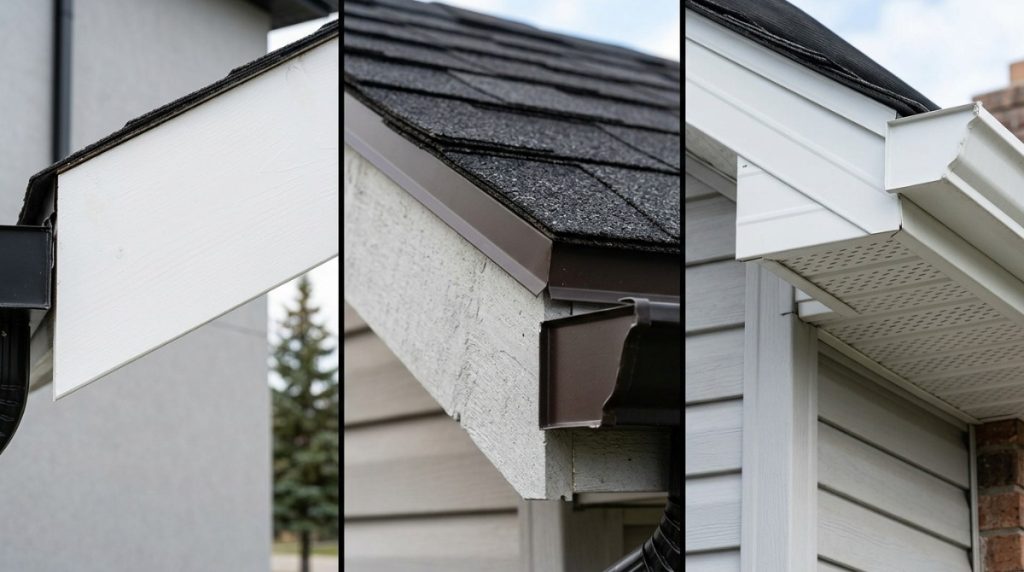
First, identify what your roof edge is made of
The surface decides the method, so look closely before you buy anything.
Fascia board
The fascia is the board along the edge of the roof. It can be wood, aluminum wrapped or vinyl. Many homes without gutters have a fascia that is perfect for clips. You can see what this part of a house looks like in this overview of fascia.
Shingle edge and drip edge
Some roofs end with a shingle edge or a thin metal drip edge. These are thinner and need clips designed for that profile.
Vinyl siding and trim
On gable ends and some rooflines, lights run along siding or trim. These surfaces need clips that grip without cracking or leaving marks.

Brick, stucco and metal
Brick and stucco are tricky, because clips have nothing to hold. Metal roofs work well with magnetic clips.
If you are not sure what you have, send us a photo and we will tell you.
Methods that work without gutters
Fascia clips
Fascia clips hold the light cord against the board. They work best on a flat, solid fascia. They are secure and gentle on the surface.
Shingle edge clips
These slip under or over the edge of the shingle. They work, but they have limits. They depend on the shingle being in good shape, and forcing them can damage the roof. If a shingle feels brittle in the cold, do not push.
Siding and trim clips
Designed for vinyl siding and trim, these clips grip the edge without nails. They suit gable ends and rakes.
Magnetic clips for metal
On steel roofs and metal trim, magnetic clips hold lights firmly without any hole. They are easy and clean, but they do not work on aluminum, which is not magnetic.
Adhesive hooks
Adhesive hooks can work on smooth, clean, dry surfaces in mild weather. In Michigan, cold and moisture often make the adhesive fail. Lights that look fine in November can come loose by January.
Permanent clips and track
Some homeowners install permanent clips or an aluminum track so they never need to hang lights again. This is a bigger project and a long term choice. We focus on seasonal installs, so we do not handle permanent track.
A quick chooser: surface to method
| Surface | Best method |
| Fascia board | Fascia clips |
| Shingle edge | Shingle edge clips, with care |
| Vinyl siding or trim | Siding or trim clips |
| Metal roof | Magnetic clips |
| Brick or stucco | Professional help or specialty hardware |
What about gutter guards?
Gutter guards change the plan, because the guard sits where a clip would normally go.
Some guards are mesh, and certain hooks can fit through the openings. Others sit tight under the shingle and leave no room for anything. In those cases, an edge clip on the fascia or the roof edge is a better choice.
That is why we ask about gutter guards in our quote form. It tells us what will work before we arrive.
Spacing and layout
Good spacing keeps lights straight and secure.
Clip spacing
A common spacing is about 12 to 18 inches. Place clips closer together in windy spots, where lights can flap and loosen.
Straight runs versus icicle drops in wind
Straight runs hold up well. Icicle style drops move more in wind and can tangle. If your house sits in an open area, a straight run is often the calmer choice.
Handling corners and gable ends
Corners need a clip on each side, so the line turns cleanly instead of hanging loose. On gable ends, follow the slope and check that the clips are firm, since this is where wind pulls hardest.
Mistakes that damage roofs and trim
These are the ones we see most often:
- Staples and nails. They create holes that can leak, and they can cause problems with a roof warranty.
- Forcing clips under shingles. Cold shingles crack easily.
- Pulling the string to remove it. This rips clips loose and can take trim with it.
- Mixing the wrong clip with the surface. A clip made for a gutter will not hold well on a fascia.
Roofing manufacturers generally advise against fastening anything through shingles, because it can lead to leaks. When in doubt, choose a clip that grips and avoid any hole.
Practical example: three houses with no gutters
Here is how we think about three common houses.
The ranch with a wood fascia. This is the easy case. Fascia clips along the edge give a clean, straight line. The job goes smoothly.
The newer home with a thin drip edge. The edge is narrow, so the clip choice matters. We pick a clip made for that profile and test it before finishing.
The house with vinyl siding on the gables. Here, siding clips follow the slope. We keep the spacing tight, because wind hits gables hard.
One customer was set on using staples because they seemed quicker. After we walked through what staples can do to a roof, and showed them a clip that held just as well, they changed their mind. They liked that the roof stayed clean.
Michigan weather and your clips
Cold changes how clips and cords behave, so it is worth planning for it.
Plastic gets stiff and brittle when temperatures drop. A clip that snaps on easily in October can crack if you install it on a freezing morning. If you are hanging lights in late November or December, work in the middle of the day when it is warmest, and handle the clips gently.
Snow and ice add another factor. Snow sliding off a roof pulls on anything attached to the edge, including a line of lights. Clips that grip firmly and sit tight to the surface hold up better than loose ones. Icicle style drops catch more snow and wind than a straight run, so keep that in mind if you live in an open area.
Moisture matters too. Ice that forms behind a clip can push it loose. This is another reason we avoid relying on adhesive in the winter.
A simple habit helps. After the first heavy snow or windy night, take a quick look from the yard. If a section sags or a clip has shifted, it is much easier to fix early than after a month of weather.
A simple plan if you are doing it yourself
If you decide to hang the lights on your own, a short plan makes the job safer and neater.
- Identify your roof edge surface and choose the matching clip.
- Test the lights on the ground before you hang anything.
- Work from a stable ladder on level ground, and have someone foot it.
- Place clips first, then press the lights in, rather than stretching the line.
- Keep the cord loose enough to move with the temperature changes.
- Plug in and test the full run before you climb down for the last time.
If any step feels uncertain, especially the ladder part, that is the moment to ask for help.
Removing lights without damage
Takedown matters as much as hanging.
- Unplug the lights first.
- Remove one clip at a time, working along the line.
- Never pull the cord to yank the clips.
- Coil the lights loosely and store them dry.
Done gently, the roof and trim stay in the same shape you found them.
When to let a professional handle it
Hire help if the roof is high, steep or icy, or if you are not sure what surface you have. Ladders and rooflines are not a good place to learn.
Our crew is insured and CLIPA certified. We install commercial grade C9 lights with clips matched to the surface. Our packages include a full season warranty and service within 48 hours if something goes wrong, plus takedown in January and storage in our heated warehouse.
Frequently asked questions
Can I use adhesive hooks?
Sometimes, on clean, dry, smooth surfaces in mild weather. In cold Michigan conditions, the adhesive often fails, so we do not rely on it for a full season.
Do shingle clips fall off in snow?
They can if they are the wrong style or placed poorly. Snow sliding off a roof can pull on clips and lights, so a firm, correctly matched clip matters.
How do I hang lights on gutter guards?
It depends on the type of guard. Some mesh guards allow certain hooks. Others leave no room, and an edge clip is better. Send us a photo and we will tell you what we would use.
What about stucco?
Stucco is difficult, since clips have nothing to grip. Specialty hardware or professional help is the safer route.
How far apart should clips be?
Usually about 12 to 18 inches, with tighter spacing in windy areas or on gable ends.
Send us a photo
No gutters should not mean no lights. Upload a photo of the front of your house in our quote form and we will tell you how we would hang it. We will also create a free digital rendering so you can see the result first.
Learn more about our residential holiday lighting, read our FAQ or contact us. You can also call us at (810) 522-8950.
If you want to understand the parts of a roof edge better, this overview of eaves is a helpful read.
