
We once visited a home where the homeowner was sure the lights had ruined the gutter. The edge was bent and the line sagged. When we looked closer, the culprit was not the lights at all. It was the ladder. A heavy ladder had rested against the gutter for a long time, and the gutter had paid for it.
That is the pattern we see most. When you hang Christmas lights on gutters, the lights are rarely the problem. Ladder pressure, poor spacing and the wrong clip cause nearly all of the damage.
We are Elves Holiday Lighting in Howell. This guide puts damage prevention first, so you can enjoy the lights without a repair bill in January.
The short answer
Use plastic gutter clips made for your gutter type. Keep the ladder off the gutter by using a stabilizer. Space the clips evenly and leave a little slack in the line. Never nail or staple. When the season ends, remove one clip at a time.
If you follow those five habits, you avoid most gutter problems. Now let us look at why they matter.
How gutters get damaged and how to prevent each cause
Understanding the cause makes the fix obvious.
Ladder pressure and crushed edges
A gutter is a thin channel. It is made to carry water, not the weight of a person and a ladder. Leaning a ladder on the gutter can dent or crush the edge, and it can pull the gutter away from the house.
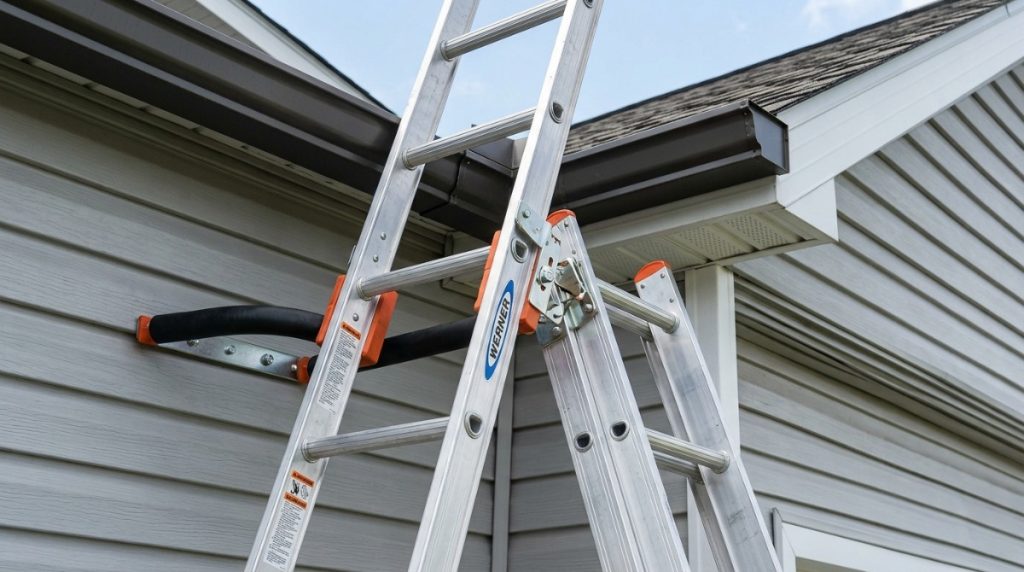
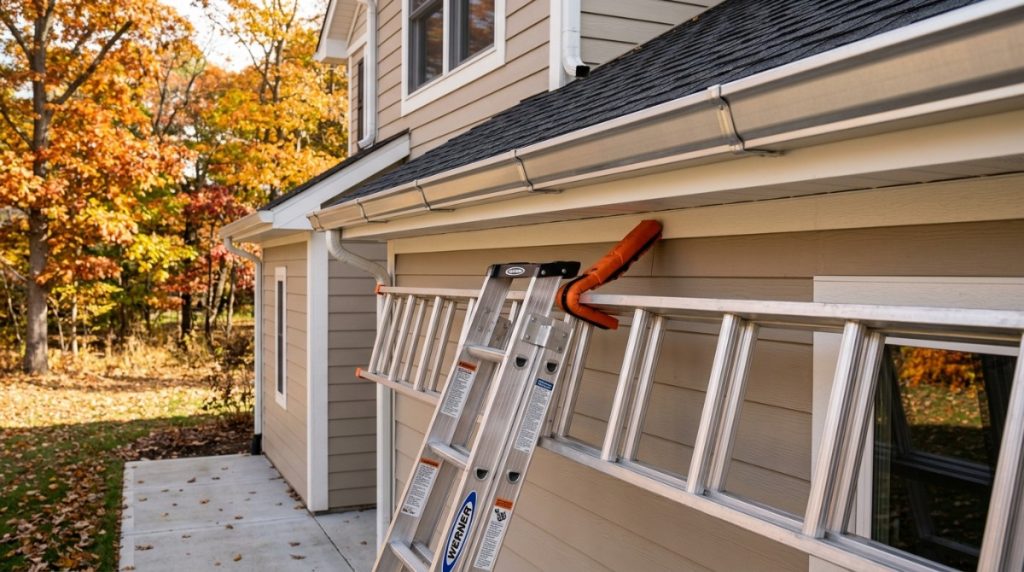
The fix is a ladder stabilizer, which holds the ladder away from the gutter and spreads the load to the roof or wall.
Sag from weight and wide clip spacing
Lights add weight, and C9 strings are heavier than mini strings. If clips are too far apart, the line droops and pulls on the gutter between each clip. Even spacing keeps the load spread out.
Scratches from metal hardware
Metal hooks, wire and screws can scratch the finish of a gutter. Once the coating is scratched, rust and fading can follow. Plastic clips made for gutters are gentler on the surface.
Ice and snow load in a Michigan winter
Michigan winters add weight. Snow piles up, melts and refreezes, and ice dams form at the roof edge. You can learn how they form in this overview of an ice dam on a roof.
A gutter already works hard in winter. Heavy ice plus a line of lights adds strain, so firm clips and a tidy line matter even more.
A small checklist before you start
- Look for loose sections, dents or sagging gutters. Fix those first.
- Check that the gutter is clear of leaves and debris.
- Test the lights on the ground.
- Confirm you have a stabilizer, a helper and level ground.
Choose the right clip for your gutter
Not every clip fits every gutter. Check the type of gutter you have, then choose the matching clip.
Standard gutter clips for K style and half round
K style gutters have a flat back and a decorative front. Half round gutters look like a tube cut lengthwise. Most standard plastic gutter clips are made to fit both shapes. Check the product for your gutter type.
Clips for vinyl gutters
Vinyl gutters are lighter and can be less rigid, especially in cold. They can crack or flex if you force a clip. Choose a clip designed for vinyl, and work gently. Vinyl is more sensitive to cold, so avoid forcing anything on a freezing morning. You can read more about the parts of a rain gutter.
Gutter guard options
Gutter guards change the plan, because they sit in the spot a clip normally uses. Depending on the guard, you may use:
- Mesh hooks: made to fit through the openings in mesh guards
- Shingle clips: used with care, depending on the roof
- Edge clips: attach to the roof edge or fascia instead of the gutter
If you are not sure which fits, send us a photo. That is why our quote form asks whether you have gutter guards.
Clips for C9 bulbs versus mini strings
C9 bulbs are larger and heavier. They need clips that hold the socket firmly and keep the bulb pointed the right way. Mini strings are light and more forgiving. Make sure the clip matches the bulb size.
Step by step installation
Plan, measure and test the lights on the ground
Measure the gutter line and decide where the outlet and plug will go. Lay the lights out and plug them in. It is much easier to fix a dead bulb on the ground than at the top of a ladder.
Set the ladder correctly
Place the ladder on firm, level ground. Use a footing board if the ground is soft. Attach a stabilizer so the ladder rests on the roof or wall rather than the gutter. Have a helper hold the base.
A common rule is to set the base about one foot out for every four feet of height. Never overreach. Climb down and move the ladder instead.
Place clips and spacing guide
Space clips about 12 to 18 inches apart. Place them closer together if you live in a windy area or are using heavier C9 strings. Clip the line in place without pulling it tight, so there is a little slack.
Corners, downspouts and outlets
At corners, add a clip on each side so the line turns cleanly. Route the line around downspouts, rather than over them. Keep plugs and connections off the ground and out of standing water, and plug into an outdoor rated outlet.
Final check from the street
Walk across the street and look at the line. It should be straight, with no sagging sections. Check that every bulb is lit before you pack up.
Hanging without a ladder
A hanging pole can place lights on low gutters from the ground. It is a great option for a one story home. The limits are height and control. On a two story house, a pole alone will not reach safely, and getting clips seated accurately takes practice.
If you cannot reach the gutter comfortably, that is a signal to get help.
Keeping lights safe on gutters through a Michigan winter
Hanging the lights is only the first half. A few habits help them survive the season without hurting the gutter.
After the first heavy snow, take a look from the yard. Check that the line is still straight and that no clip has slipped. A small sag is easy to fix early. Left alone, it can grow as snow and ice add weight.
Watch for ice. If an ice dam forms along the roof edge, do not chip at it near the lights. Hitting ice with tools is a quick way to dent a gutter and break a bulb. If ice is building up, a roofer or a professional can deal with it safely.
Keep an eye on outlets and plugs, too. Moisture is the enemy of any outdoor connection. Use outdoor rated cords, keep connections off the ground and cover them if you can.
Finally, resist the urge to climb up in bad weather. A quick fix in the middle of a snowstorm is not worth a fall. If a section goes dark in January, wait for a clear, dry day, or call someone who does this for a living. Our seasonal customers get service within 48 hours if lights fall or bulbs go out.
Quick reference: spacing and slack
If you want a simple summary to keep handy while you work, here it is:
- Clip spacing: about 12 to 18 inches, closer in wind or with heavier C9 strings
- Slack: leave the line relaxed, not stretched tight
- Corners: one clip on each side of the turn
- Downspouts: route the line around, not over
- Ladder: stabilizer on, level ground, helper at the base
- Never: nails, staples or metal hooks that scratch
Removing lights without hurting the gutter
How you take lights down matters as much as how you hang them.
- Unplug the lights first.
- Remove one clip at a time, working along the line.
- Never yank the string. That can pull clips and bend the gutter.
- Coil the lights loosely and store them dry.
Our crew begins takedown in the first week of January and carefully removes every light, leaving the home as we found it.
Practical example: three gutter types
Here is how we think about three common gutters. The details vary from house to house.
Aluminum gutters. These are sturdy and common. Plastic clips work well, and the key is protecting the finish and keeping the ladder off the edge.
Vinyl gutters. These need a gentler touch. Cold makes them stiffer, so we are careful with clips and handle them slowly.
Gutters with guards. The guard changes the plan. We choose a hook or an edge clip that fits the guard and keeps the line straight. In some cases, the guard is the reason we choose a different mounting spot.
One customer had tried clips on their own and found the line sagging in several places. The clips were too far apart. After we respaced the line and added slack, it hung straight and held up through the season.
When to hand the job to a professional
Consider help if the gutters are high, if you have guards, if the roof is steep or if ladders make you uneasy. A professional crew has stabilizers, helpers and the habit of working carefully.
Our crew is insured and CLIPA certified. We install commercial grade C9 lights, include a full season warranty and respond to service needs quickly. Many first time Elves customers invest between $800 and $2,000 for a full package, which includes design, installation, maintenance, takedown and storage.
Frequently asked questions
Can vinyl gutters hold lights?
Yes, with the right clips and a gentle approach. Use clips made for vinyl, space them evenly and avoid forcing anything in cold weather.
How do I hang lights on gutter guards?
It depends on the guard. Mesh guards may accept special hooks. Others need an edge clip on the roof or fascia. Check what fits before you buy.
Will clips scratch aluminum gutters?
Plastic clips made for gutters are gentle on the finish. Metal hardware is more likely to scratch.
Can I use adhesive hooks?
They can work in mild weather on clean, smooth surfaces. In Michigan, cold and moisture often make adhesive fail, so we do not rely on it for a full season.
How do I take lights down safely?
Unplug them, remove one clip at a time and never pull the string. Move the ladder rather than overreach.
Let our crew handle the ladder
If you would rather skip the ladder, we are happy to help. Get a free estimate and digital rendering, and we will show you what your home could look like.
Learn more about our residential holiday lighting, read our FAQ or contact us. You can also call us at (810) 522-8950.

One Response