
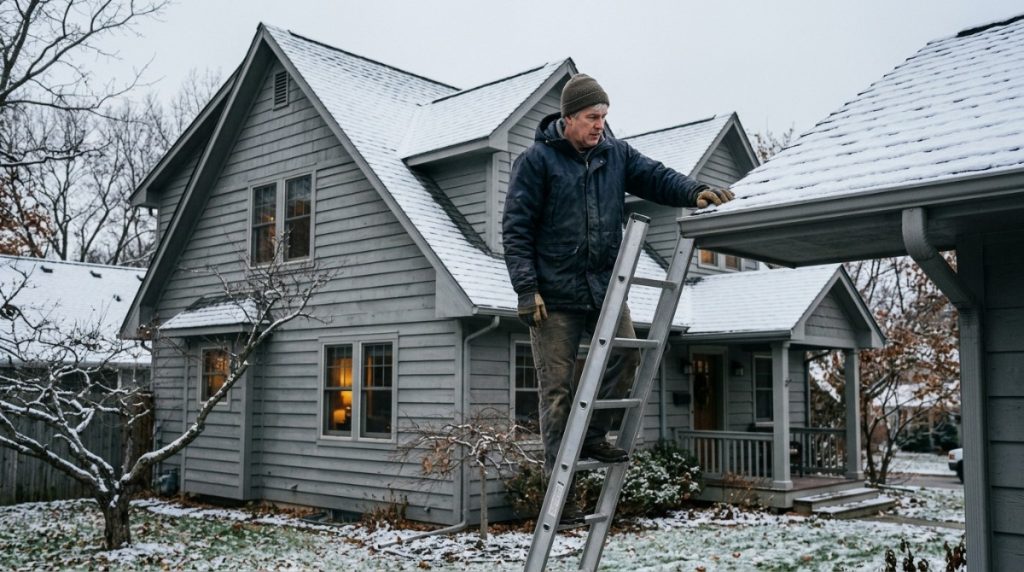
Every fall we get a call that starts the same way. A homeowner in Livingston County bought a permanent light kit online, carried the ladder out, and got about six feet up before deciding this was a job for somebody else. Some of those calls come later, in January, when the lights stopped halfway across the roofline.
If you are weighing permanent lights vs a pro track system, you are asking a fair question. Michigan winters are hard on anything bolted or stuck to a house. We are Elves Holiday Lighting in Howell, and we have stood on enough Livingston County roofs to tell you where each option wins and where it does not.
The short answer: which one should you choose?
Pick based on your house, your budget and how much you want to commit.
- Retail kit (Govee or similar): best for a one story home with a short, easy to reach roofline, if you accept visible mounts.
- Professional track system: best if you want hidden mounting, a stronger warranty and the cleanest look from the street.
- Seasonal professional lighting: best if you are not ready to commit to a permanent install and want the house lit every December without lifting a finger.
Now let us get into the details, because the right answer changes a lot once you look at your own roofline.
What is the difference between a retail permanent kit and a track system?
Both give you smart, color changing lights that live on the house all year. The difference is how they attach and what protects them.
How a Govee or big box kit mounts
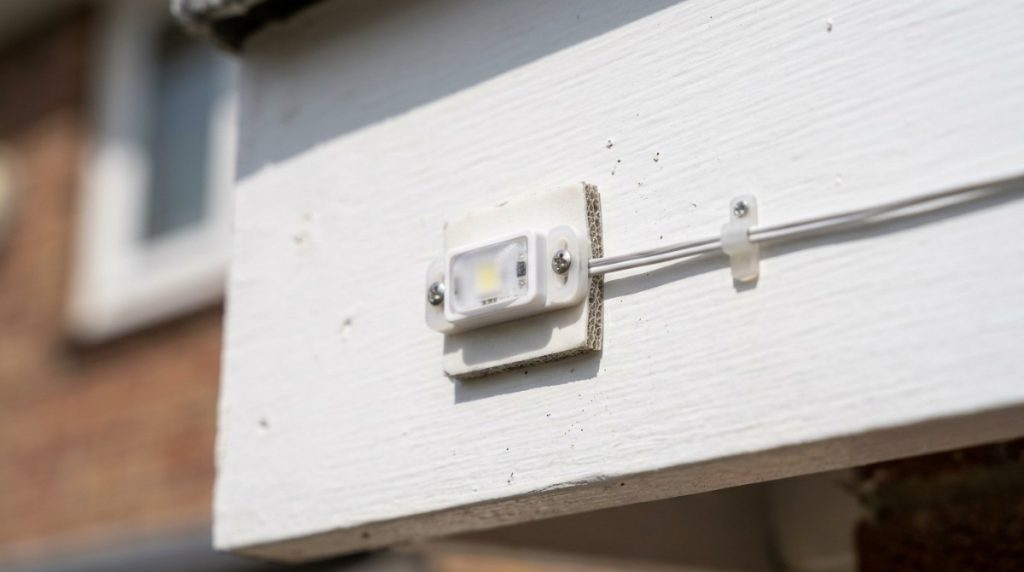
Retail kits usually come as a long strip or string of small LED pods. They attach with adhesive, small clips or little plastic domes that hold the line against the fascia or soffit.
That is why they are attractive. The kit is cheap to buy, ships to your door and can be installed in a weekend if the roof is low.
The catch is that the mounting points are visible, and everything depends on the adhesive and clips staying put through a Michigan winter.
How a professional track system works
A track system is an aluminum channel. It is fastened to the trim or fascia, and the lights seat inside the channel. When it is installed well, it looks like part of the house.
Think of it like a gutter for your lights. The track gives the lights a rigid, protected home, hides most of the wiring and can be painted or finished to match your trim.
Because the channel is screwed in rather than stuck on, it is far less likely to drift, sag or peel.
Where an aftermarket track for Govee fits in the middle
Some companies sell aluminum track made to hold retail kit lights. It is a middle path. You get a cleaner mount than adhesive alone, but you still carry the question of who installs it and who stands behind it when something fails.
If you go this route, ask who is responsible for the lights, who is responsible for the track and who comes out when one section goes dark.
Cost: what you actually pay
Price is where most people either relax or panic, so let us keep it plain.
| Option | Typical cost | What is included |
| Retail permanent kit | Roughly $300 to $600 per 100 feet | Lights only. Controllers, power supplies and your time are extra. |
| Professional track system | About $18 to $40 per installed foot | Track, lights and professional installation. |
| Seasonal professional display | Many first time Elves customers invest $800 to $2,000 | Design, installation, maintenance, takedown and storage. |
Retail kit pricing
A kit looks like a bargain on the product page. Then you add a second controller for a long roofline, extra power supplies, a ladder you may not own, and a weekend of work. If you hire someone to hang it, the savings shrink quickly.
Professional track pricing
Published installer ranges run about $18 to $40 per installed foot. On a 150 foot roofline, that lands between $2,700 and $6,000. That is a real investment, and it is worth treating like one.
What is usually left out of both quotes
Whichever way you go, ask about these before you say yes:
- Extra controllers and power supplies for long runs
- Removal if you later sell or repaint
- Repairs after storms, ice or squirrels
- Who pays for a service call and how fast they respond
What a seasonal professional display costs by comparison
A seasonal display costs less up front and asks nothing of you after December. Our crew designs it, installs it, fixes any issue and takes it down in January. Everything goes into our heated warehouse until next year.
One thing we are honest about: we install only our own commercial grade LED lights, with C9 bulbs on every roofline. We do not install lights you already own, mostly for quality and liability reasons. If you want a retail kit hung, that is a job for a different company.
How each one looks when the lights are off
Most people shop for the lit look. You will live with the unlit look for roughly ten months of the year, so it deserves equal attention.
Visible domes and cables
On a retail kit, the small domes and the cable between them stay visible. On a white fascia, that can be fine. On dark trim, brick or stained cedar, the line can look busy in daylight.
Color matched track and the street view test
Track is usually available in finishes that blend with the trim. When it is done well, most neighbors will not know it is there until the lights come on.
Here is a simple way to judge any option: stand across the street at noon and look at the roofline. If you notice the hardware before you notice the house, keep shopping.
How each one survives a Michigan winter
This is the part product pages skip, and it is the part we see on service calls.
Ice, snow slide and gutter ice dams
Snow and ice slide off a roof with real force. Anything that sits proud of the surface can get caught, bent or pulled. Ice dams, which form when melting snow refreezes at the roof edge, add weight and pressure right where the lights live. You can read how they form in this overview of an ice dam on a roof.
A rigid, screwed down channel handles that kind of load better than a line held by adhesive.
Wind and loosening mounts
Wind works on a loose line the way it works on a flag. Over a few months, small clips can loosen, and a lifted section keeps flapping until something gives.
Cold weather adhesive behavior
Adhesive likes a clean, warm, dry surface. Michigan gives it cold, wet and dirty ones, with freeze and thaw cycles on top. Adhesive mounts can look perfect in October and let go by February.
What to ask about IP ratings and what they do not tell you
You will see ratings like IP67 on retail packaging. An IP rating describes how well an enclosure resists dust and water. The IP Code is a useful standard, but it tests the light itself, not how the mounting holds up in ice, wind and a decade of seasons.
So ask two questions: what is the light rated for, and how is it fastened to my house?
Warranty, repairs and who answers the phone
Reading a 3 year versus a lifetime light warranty carefully
A long warranty sounds great, so read what it actually covers. Many cover the light itself but not labor, the mounting or damage from weather. A lifetime warranty on a strip means little if you must climb up and replace the strip yourself.
Look for answers to these:
- Does it cover labor and service calls?
- Does it cover the mounting hardware or only the LEDs?
- Who comes out, and how soon?
What happens when one section fails in January
This is where DIY gets tough. A dead section in January means a cold roof, ice and a ladder. With a retail kit, you are the repair crew or you are finding one.
With a professional install, the company that put it up should be the one that fixes it. For our seasonal customers, we promise to be out within 48 hours if lights fall or bulbs go out.
Practical example: three Livingston County homes
Here is how we talk through it with homeowners. We keep the details general on purpose, because every house is different.
The one story ranch. Low roofline, easy reach, simple runs. A retail kit can work here, and we have no problem saying so. If the homeowner is handy and likes a weekend project, this is the house where DIY makes sense.
The two story colonial. This is where we hear the ladder stories. Reaching the second story fascia safely takes the right equipment and training. For this home, a professional install, either permanent track or a seasonal display, is the safer choice.
The steep gable. Steep pitch and tall peaks are risky to work on and tough for adhesive to hold. We would steer this homeowner toward track, or toward a seasonal display that skips the permanent commitment.
Our honest advice: if you are not sure you want lights on the house all year, do not buy permanent lights yet. Light the house with a seasonal display for a winter or two and see how you feel.
HOA, roof warranty and resale questions
Asking your HOA the right way
Ask before you buy. Bring photos of the product, the mounting style and a simple description of where it will go. HOAs usually care about visible hardware, color in the off position and how the lights look at night.
We have seen homeowners get a quick yes simply by showing a rendering of the finished look. That is one reason we offer free digital renderings on every seasonal project.
Fasteners, shingles and roof warranties
Track is usually fastened to trim, not shingles, but details matter. Ask any installer where the fasteners go and how they are sealed. If you have a newer roof, confirm with the roofer or manufacturer that the plan does not affect your warranty.
Resale: what buyers actually notice
Buyers notice a clean roofline. They also notice sagging strips, yellowed adhesive and mismatched hardware. A neat track install can read as an upgrade. A patchy DIY job can read as a project they now have to remove.
Which option fits you? A simple decision guide
- You are handy, the house is one story and the budget is tight: a retail kit may be a good fit.
- You want a clean, hidden look and a long term install: a professional track system is worth pricing out.
- You have a two story home or a steep roof: hire a professional either way.
- You are not sure you want permanent lights: start with a seasonal professional display.
- You have an HOA: get approval in writing before buying anything.
- You want zero work in December and January: seasonal service with takedown and storage is the easiest path.
Frequently asked questions
Are Govee permanent lights good in Michigan winters?
They can work, especially on a low, simple roofline. The weak point is usually the mounting. Adhesive and clips deal with ice, wind and freeze and thaw cycles less reliably than a screwed down track, so inspect them every spring and fall.
Can I put a track under Govee lights later?
In many cases, yes. Aftermarket track exists for retail kit lights, so you can upgrade the mount without changing the lights. Ask whoever installs it who covers a failure of the lights versus the track.
Do permanent lights hurt my roof?
Most permanent systems attach to the fascia or trim rather than the shingles, so damage is less likely when they are installed carefully. Still, confirm the fastener locations and sealing, and check your roof warranty if the roof is new.
How long do permanent lights last?
Many LED products advertise tens of thousands of hours, often 50,000 hours or more. In real life, the lifespan depends on weather, power supplies, controllers and how well the system is mounted. The LEDs often outlast the hardware around them.
Is seasonal lighting cheaper over five years?
For many homeowners, yes at the start. A seasonal display costs a fraction of a full permanent system and includes takedown and storage. Over five years the math depends on your roofline. If you want to compare real numbers, we are happy to price your home.
Not ready to commit to permanent lights?
Send us a photo of your home and we will design a seasonal display with a free digital rendering, so you can see the result before you spend anything. Our crew handles design, installation, maintenance, takedown and storage across Howell, Brighton, Hartland, Pinckney, South Lyon and Fowlerville.
Learn more about our residential holiday lighting, browse our FAQ or contact us for a free estimate. You can also call us at (810) 522-8950.
